Fast Charging Explained: Watts, Chargers & Battery Health
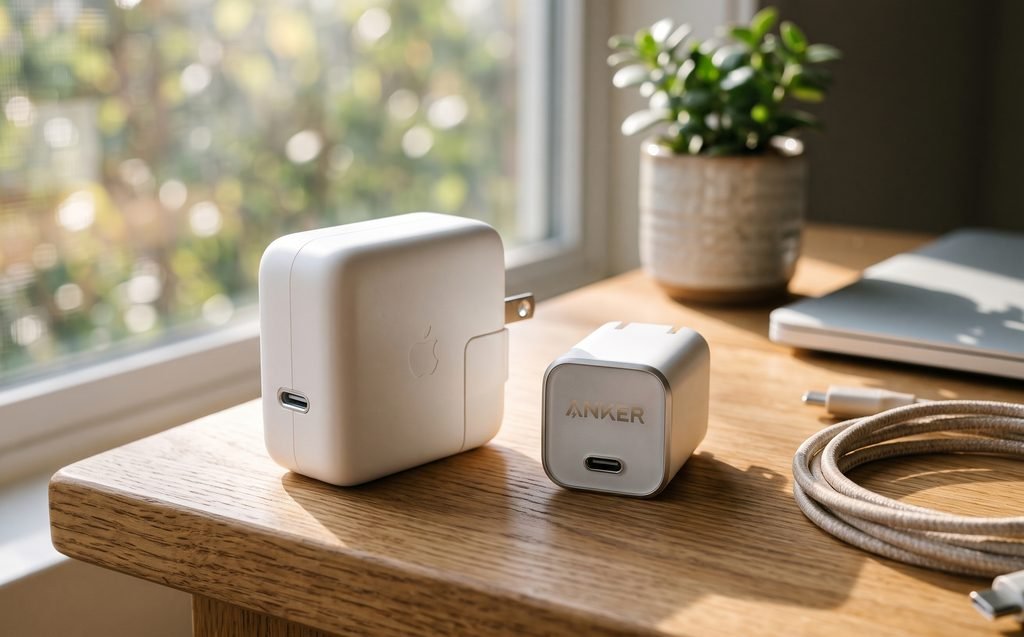
Fast Charging Explained: Watts, Chargers and Battery Health
Charging speed has become an important factor when buying a new smartphone. Along with camera quality, battery capacity and performance, many buyers now want to know how quickly a phone can recharge. Some manufacturers advertise 45W charging, while others promote 120W or even higher speeds. Marketing claims often suggest that a smartphone can reach 50% battery in just a few minutes.
But what do these wattage numbers actually mean? Why doesn’t every charger provide fast charging to every phone? How do smartphones and chargers communicate to control the amount of electricity being delivered? And most importantly, can using fast charging every day damage your battery?
Understanding these questions can help you choose the right charger, avoid unnecessary accessories and take better care of your smartphone battery.
Watts, Volts and Amps: The Basics of Charging
Charging power is measured in watts (W). It depends on two important electrical values: voltage (V) and current (A). Voltage represents electrical pressure, while current describes the flow of electricity.
A simple way to understand this is to imagine water moving through a pipe. Voltage is similar to water pressure, while current represents how much water flows through the pipe. When electrical pressure or current increases, more power can be delivered.
The basic relationship is:
[
\text{Watts} = \text{Volts} \times \text{Amps}
]
<LearningViz type_id=”DC_CIRCUIT_POWER” initial_values={{“voltageVolts”:12,”resistanceOhms”:6}} locale_override=”en-US”/>
For example, a charger supplying 5 volts at 2 amps delivers 10 watts of power. If it supplies 9 volts at 3 amps, the output increases to 27 watts.
Older USB chargers generally operated at 5 volts, which limited their charging power. Modern USB-C chargers can support higher power levels by increasing voltage, current or both, depending on the charging technology.
A standard USB-C charger may provide 5 volts at 3 amps, delivering up to 15 watts. Higher-power charging requires compatible hardware and a suitable charging protocol.
One important thing to understand is that a charger does not simply force its maximum power into a smartphone. The phone and charger communicate to determine an appropriate charging level. The smartphone only accepts the power it is designed to support.
For example, connecting a 25W smartphone to a 100W charger does not automatically damage the battery. If both devices use a compatible charging standard, the phone will normally draw only the power it can safely handle.
How Chargers and Phones Communicate: USB Power Delivery
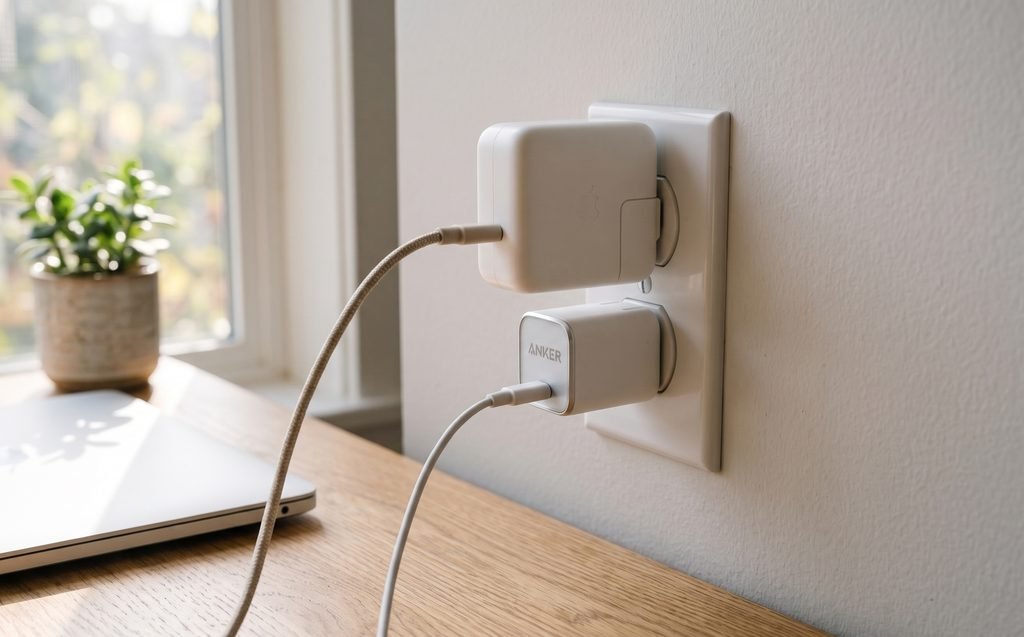
When you connect a smartphone to a charger, the two devices exchange digital information before fast charging begins. The charger tells the phone which voltage and power levels it can provide, while the smartphone selects an appropriate option based on its charging requirements.
One of the most widely used international standards for this process is USB Power Delivery, commonly known as USB PD. It was developed by the USB Implementers Forum (USB-IF), the organisation responsible for developing and maintaining USB specifications.
Earlier versions of USB Power Delivery supported a maximum output of 100 watts, using 20 volts and 5 amps. However, the introduction of USB PD 3.1 in May 2021 significantly expanded its capabilities. The updated standard made it possible to deliver up to 240 watts at 48 volts.
This higher power capacity is mainly useful for larger electronic devices, including laptops and other power-hungry equipment. It also allows USB-C technology to support a wider range of devices through a common charging standard.
What Is PPS and Why Does It Matter?
Programmable Power Supply, or PPS, is an important feature within USB Power Delivery. It allows a compatible smartphone to request small, adjustable changes in voltage instead of relying only on fixed voltage levels.
This flexibility helps the phone manage charging more efficiently. By adjusting the power supply according to battery requirements, the system can reduce unnecessary energy conversion inside the device and help control heat generation.
Samsung’s 45W Super Fast Charging is one example of this technology. To achieve its full advertised charging speed, the smartphone needs a compatible charger that supports both USB PD and PPS. A suitable 5-amp USB-C cable is also required.
Without the correct combination of charger, cable and phone support, charging may still work, but it might not reach the maximum advertised speed.
Proprietary Charging Technologies and Dual-Cell Batteries
Alongside USB Power Delivery, several smartphone manufacturers, particularly Chinese brands, have developed their own fast-charging technologies. These systems can deliver 100 watts or more, allowing compatible smartphones to recharge in a relatively short time.
However, achieving the maximum charging speed usually requires the manufacturer’s own charger and specially designed cable. A standard USB-C charger may not support the same proprietary charging protocol, even if its advertised wattage is high.
To handle such high power levels, some smartphones use dual-cell battery designs. Instead of relying on a single battery cell, the battery is divided into two sections that can charge simultaneously.
Xiaomi previously explained its 120W HyperCharge technology using the example of a vehicle with two fuel tanks. Rather than filling one tank at a time, both tanks are filled together, helping the system achieve faster overall charging.
Xiaomi claimed that its battery could retain 80% of its health after 800 charging cycles. However, this figure comes from the company’s own testing and should be understood as a manufacturer-reported result rather than a guarantee for every user.
European Union Introduces USB-C Charging Rules
The European Union has introduced common charging requirements to reduce the need for different chargers and cables. Since December 28, 2024, USB-C has been mandatory for new smartphones sold in the EU.
The rules also require devices capable of wired charging above 15 watts to support USB Power Delivery. Manufacturers can continue offering their own fast-charging technologies, but these systems cannot prevent compatible USB PD charging.
This change is useful for consumers because it makes chargers and cables more interchangeable across different brands. It may also benefit buyers in other countries, as manufacturers often use similar hardware designs across international markets.
Why the Charging Cable Is Just as Important
Many smartphone users spend money on an expensive fast charger but continue using an old or inexpensive USB-C cable. This can prevent the phone from reaching its maximum charging speed.
A standard USB-C cable designed for 3 amps can generally support up to 60 watts at 20 volts. For higher power levels, a compatible 5-amp cable is required.
These higher-current cables usually contain a small electronic chip called an e-marker. It communicates the cable’s capabilities to the charger and confirms that the cable is designed to handle higher current safely.
If the required e-marker information is missing, the charger may reduce its output as a safety measure. This means that even a powerful charger cannot deliver its full potential through an unsuitable cable.
Proprietary fast-charging systems have additional requirements. Some manufacturers use specially designed cables with specific internal wiring and components to support their charging technology.
For the best results, users should check the charging specifications of their smartphone and choose a compatible charger and cable. Buying accessories based on wattage alone is not enough to guarantee the fastest possible charging speed.
Why Do Advertisements Usually Mention “50 Percent”?
Lithium-ion batteries charge in two main stages. During the first stage, the battery receives a steady and relatively high current, allowing it to charge quickly to around 70 percent. As the battery approaches its maximum capacity, the second stage begins. At this point, the voltage is maintained at a constant level while the charging current gradually decreases.
This is why charging the final 20 to 30 percent takes considerably longer, regardless of how powerful the charger is.
For this reason, smartphone manufacturers usually advertise charging times from zero to 50 percent. For example, Apple says the iPhone 17 and iPhone 17 Pro can reach approximately 50 percent charge in around 20 minutes when connected to a 40W or higher power adapter. The iPhone Air, meanwhile, can reach the same level in approximately 30 minutes using a 20W adapter.
It is worth remembering that Apple no longer includes a power adapter in the iPhone box. To achieve these charging speeds, users need to purchase a compatible USB Power Delivery (PD) adapter separately.
GaN Chargers: Smaller Size, More Power
Chargers labelled “GaN” have become increasingly common in the market. These chargers use transistors made from gallium nitride, a material that can switch on and off much faster than traditional silicon while wasting less energy during the process.
This technology allows manufacturers to reduce the size of transformers and other internal components. According to German semiconductor manufacturer Infineon, a GaN charger can be up to 70 percent smaller than a silicon-based charger with comparable power output.
However, GaN technology does not automatically make a phone charge faster. Actual charging speed depends on the charging protocol supported by both the phone and the adapter, as well as the phone’s own charging limits. The main advantages of GaN are its compact size, improved efficiency, reduced heat generation and ability to maintain high power output more effectively.
Does Fast Charging Damage Your Battery?
Heat is generally a bigger threat to battery health than charging speed alone. High temperatures accelerate chemical reactions inside lithium-ion batteries, gradually reducing their capacity and shortening their useful lifespan.
Modern smartphones are designed to monitor battery temperature continuously. If a device becomes too hot, its charging system automatically reduces the charging speed to protect the battery. Manufacturers also warn that extremely hot or cold conditions can affect fast-charging performance.
This is particularly important during Pakistan’s hot summer months. Charging a phone inside a car parked in direct sunlight, placing it under a pillow or inside a thick phone case, or playing demanding games while charging can put considerable stress on the battery.
By comparison, fast charging in a cool, well-ventilated environment is generally considered safe. Many smartphones also offer an option to limit charging to 80 percent. This can help reduce battery stress because keeping a lithium-ion battery at 100 percent for extended periods can contribute to long-term wear.
For overnight charging, standard charging speeds are usually sufficient. Fast charging is more useful when you need to recharge your phone quickly and have limited time.
What Should You Check Before Buying a Charger?
Before purchasing a charger, first check the maximum charging speed and charging standards supported by your smartphone. This information is usually available in the technical specifications section of the manufacturer’s official website.
Next, choose a charger that provides sufficient power and supports the same charging protocol as your phone. For example, a Samsung Galaxy phone that supports 45W charging may require a compatible USB Power Delivery charger with PPS support to achieve its advertised charging speed.
A high-quality charger with a higher wattage rating will not automatically damage your phone. The device communicates with the charger and draws only the power it can safely support. A suitable high-wattage adapter can also be useful for charging other devices, including laptops and tablets.
However, avoid blindly trusting the impressive power ratings printed on extremely cheap, unbranded chargers. Poor-quality adapters may have inadequate safety circuits and unreliable voltage regulation. These problems can create genuine risks for both your phone and its battery.
Ultimately, fast charging is not magic. It is a carefully managed agreement between your phone, charger and cable. When all three are compatible and the device stays within a safe temperature range, you can enjoy faster charging without unnecessarily compromising battery health.
Web News · General information and reporting. Please consult linked primary sources for further details.