XPeng Flying Car Could Launch in China in 2027 at $300,000
XPeng Flying Car Set for China Launch in 2027
Chinese electric vehicle manufacturer XPeng has announced that its two-seat flying car could become available for use in approved areas of China during the second half of 2027. The company expects the vehicle to serve recreational aviation and emergency response purposes, with an estimated price of around $300,000.
The flying car will also come with a specially designed six-wheel electric van. The aircraft will be stored inside the rear section of the vehicle and can be deployed when needed, creating a unique combination of ground transportation and personal aviation.
A New Step Toward Personal Flying Vehicles
Flying cars have long been associated with science fiction movies, futuristic concepts, and technology exhibitions. However, XPeng believes its latest development could bring this technology closer to real-world use.
According to the company, the two-seat aircraft is expected to operate initially in designated areas where aviation authorities have granted permission. Its planned applications include recreational flights and emergency services.
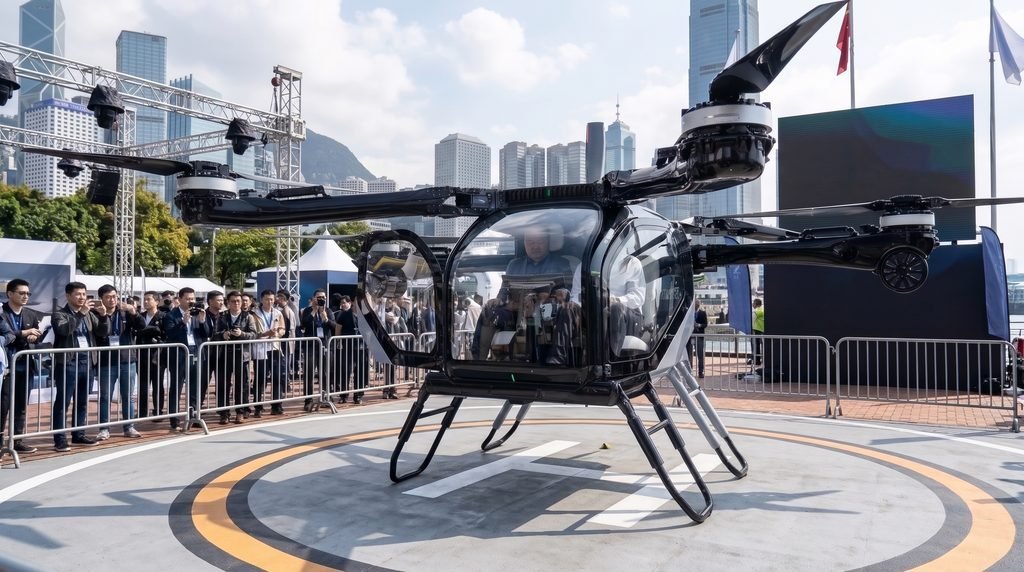
The announcement was made at the Web Summit technology conference in Lisbon, Portugal, where a model of the flying vehicle attracted considerable attention from visitors.
XPeng’s Flying Car Project Reaches a Major Milestone
XPeng’s flying car project has reportedly been under development for approximately ten years. Zhao Deli, the head of the company’s flying car project, said the vehicle had received approval for limited operations from China’s civil aviation authorities.
This development represents an important step toward introducing flying vehicles beyond experimental demonstrations. Regulatory approval is particularly important because aircraft operating in public areas must meet strict aviation and safety requirements.
A Commercial Product, Not Just a Concept
Michael Du, XPeng’s vice president and chief financial officer, described the flying car as a genuine commercial product rather than a science fiction concept or exhibition aircraft.
In an interview with Euronews, he explained that the company was moving toward practical deployment. Limited deliveries to partner organizations in China are expected to begin in the coming months, followed by a broader commercial rollout.
The estimated price of approximately $300,000 places the vehicle in a premium category. Its initial availability will also depend on approved flight locations, operating regulations, and the company’s production plans.
What Makes the XPeng Flying Car Different?
One of the most interesting features of the project is its combination of a six-wheel electric van and a detachable flying aircraft.
The van is designed to carry the aircraft inside its rear compartment. This arrangement allows users to travel on ordinary roads before deploying the aircraft for an aerial journey where permitted.
By combining two forms of transportation, XPeng aims to offer a different approach to personal mobility.
What Comes Next?
XPeng’s planned 2027 launch could mark an important development in China’s growing advanced transportation industry. However, the flying car will initially be limited to approved areas and specific applications rather than unrestricted everyday travel.
Its commercial success will depend on safety standards, regulatory permissions, production capacity, and customer demand.
If the company meets its targets, the project could bring personal flying vehicles one step closer to practical use.
What Is the XPeng Flying Car Like?
XPeng’s flying vehicle is being introduced under the name AeroHT and consists of two separate components.
The first component is a large six-wheel electric van, while the second is a compact aircraft cabin designed to carry two passengers. The aircraft is stored inside the rear section of the van and can be deployed when required. According to project leader Zhao Deli, the flying unit emerges from the back of the vehicle in a way that resembles the transformation scenes in the Transformers movies. The estimated $300,000 price includes the van as well.
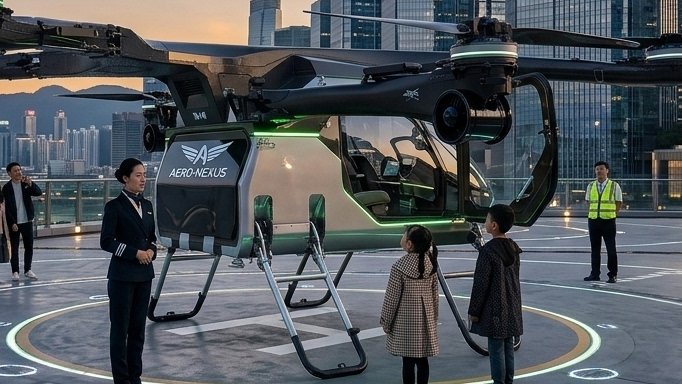
Despite being marketed as a flying car, the aircraft section does not have its own wheels. Instead, it works more like a large helicopter-style drone. Its cabin is approximately the size of a small car and rises into the air using six battery-powered propellers.
The aircraft can be controlled with a simple joystick and can also follow a pre-programmed route to a selected destination. Zhao Deli, a trained pilot, claims that he can teach someone how to operate it in just five minutes.
According to The Guardian, the vehicle can reach an altitude of up to one kilometer and currently has a flight range of approximately 30 kilometers. The company expects to double this distance in the near future by improving battery performance.
Who Is Buying It and Where Will It Be Used?
According to Michael Du, XPeng has received more than 7,000 pre-orders from customers around the world. Most of these orders have reportedly come from China, while some have also been received from the Middle East.
Potential customers include people interested in personal aviation and aerial tourism, as well as organizations involved in emergency response and public services.
However, its initial use will be limited. According to The Guardian, the vehicle will only be permitted to operate in approved parks and designated areas in China for recreational flights. It may also support emergency services that need to reach difficult or remote locations.
Zhao Deli explained that the company’s initial target audience includes people who enjoy activities such as scuba diving, surfing, off-road driving, and flying.
This means the vehicle is not currently intended to become an everyday transportation option for busy city streets. Instead, XPeng is focusing on recreational aviation and specialized services during its early rollout.
Regulatory Approval and Safety Testing
According to Euronews, the aircraft has received authorization for type inspection from China’s civil aviation authorities. During this process, government test pilots completed the required evaluations. The company is now progressing toward final type certification.
Michael Du said the vehicle has undergone test flights under a variety of conditions, including sea-level environments, high-altitude mountain regions, extreme temperatures, strong winds, and rainy weather.
Zhao Deli has also claimed that no one has been injured during the vehicle’s testing and operation.
The company has spent approximately a decade developing this technology. Manufacturing is taking place at its own factory in Guangzhou, a major city in southern China.
According to The Guardian, Zhao Deli estimates that around 20 companies in China are currently working on flying car technology.
China is also promoting what it calls the low-altitude economy, which includes drones and electric flying vehicles. The broader strategy involves starting with cargo deliveries, expanding into passenger transportation, and gradually moving from rural areas toward urban markets.
International Expansion and What It Could Mean for Pakistan
XPeng plans to work with regulators and business partners in other countries after establishing its initial operations in China. The Middle East and Southeast Asia are among its first priority markets.
Zhao Deli has stated that the company has already reached agreements with partners in the United Arab Emirates and several Southeast Asian countries. XPeng also hopes to enter European markets as soon as possible.
The vehicle was demonstrated in Dubai last month, highlighting the company’s interest in expanding beyond China.
Michael Du acknowledged that entering the European market will require addressing several challenges, including developing more affordable models, establishing suitable infrastructure, and identifying locations where flying vehicles can operate safely.
In Pakistan, there are currently no dedicated regulations for this type of vehicle, and XPeng has not announced any plans to introduce it in the country. Nevertheless, its expected expansion into the Middle East, particularly the UAE, makes this development worth watching for people interested in the future of aviation across the region.
Michael Du believes that electric aircraft could transform air transportation in much the same way that electric vehicles have changed the automobile industry.
One of the biggest advantages of electric flying vehicles, according to him, is that they do not depend on continuous road or railway infrastructure to travel between locations. If the technology becomes more affordable and receives wider regulatory approval, it could eventually create new possibilities for tourism, emergency services, and personal transportation.
Web News · General information and reporting. Please consult linked primary sources for further details.